
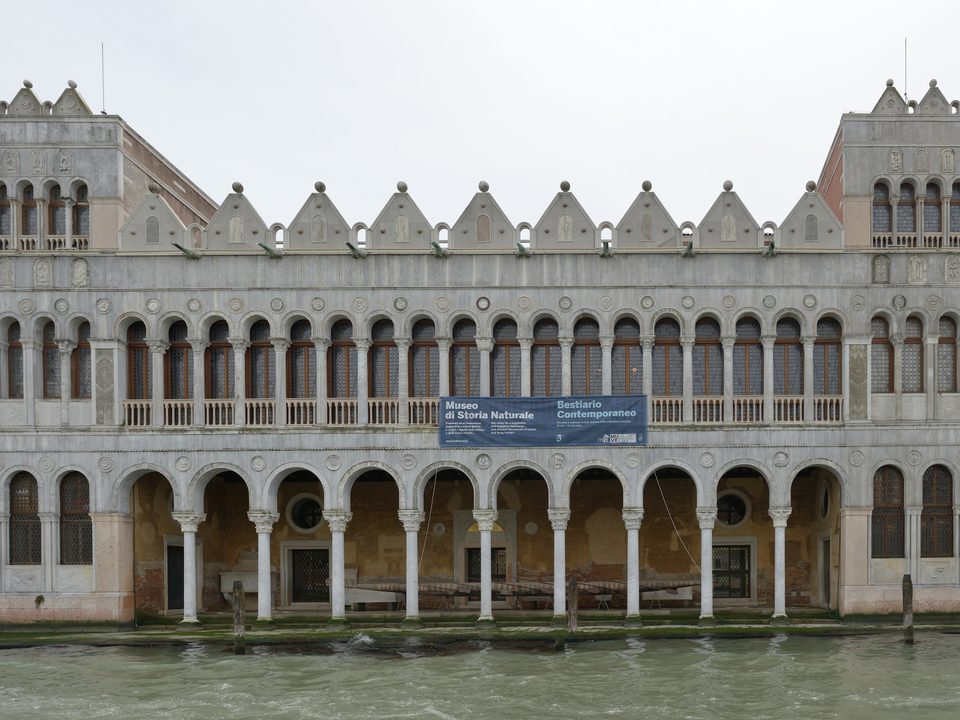
Natural History Museum of Venice
- museum
- family
- Price: €9.50 - €11.50
- Opening hours: 09:00 - 17:00 (Jun-Sep: 10:00 - 18:00), closed Mon
History
Long before it became a museum, the Fondaco dei Turchi was one of Venice's grandest private palaces, a Veneto-Byzantine residence built in the 13th century on the Grand Canal, with the tiered arcades and rounded windows typical of the style. In 1621, the Republic converted it into a fondaco — a combined warehouse, lodging house, place of worship, and trading post — for Ottoman merchants, a role it held for more than two centuries until the city took it back in 1838, by which point it had fallen into serious disrepair.
What visitors see today owes as much to the 19th century as to the 13th. Between 1862 and roughly 1890, the engineer Federico Berchet carried out a sweeping restoration, stripping away later additions and rebuilding the crenellated turrets and roofline almost from scratch — a project still debated by historians as more of a stylistic reinvention than a faithful repair. In 1923, on Berchet's own proposal, the restored palace reopened as Venice's Civic Museum of Natural History.
The dinosaur hall
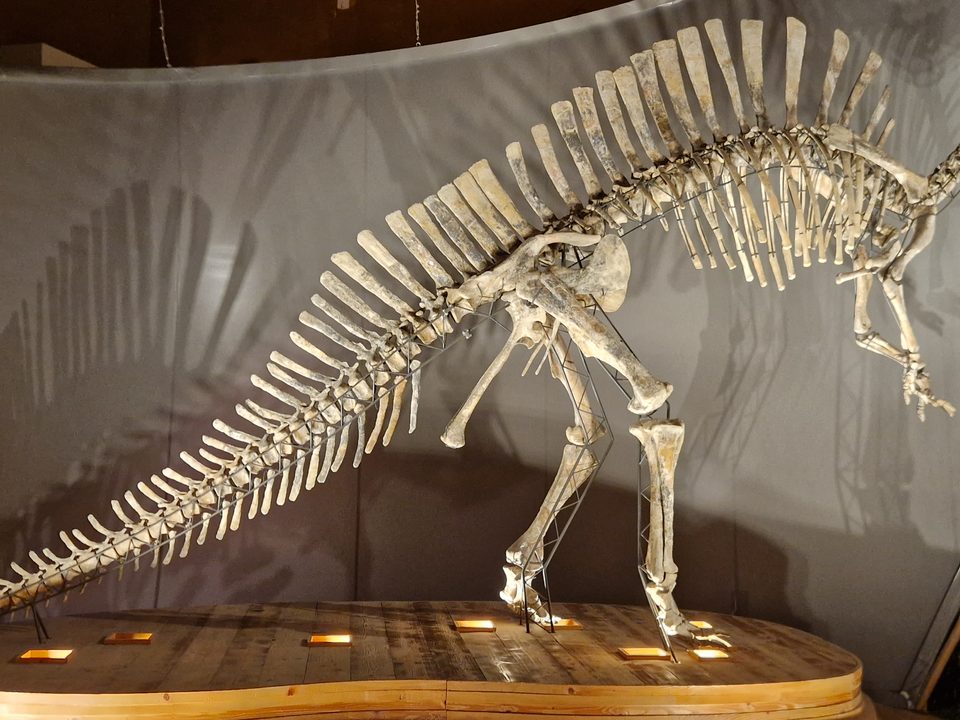
The museum's undisputed star is the mounted skeleton of Ouranosaurus nigeriensis, a roughly 7-metre plant-eating dinosaur recognizable by the tall spines running down its back. It has stood on display since 1975, the result of a 1972–73 expedition to the Ténéré desert in Niger led by the Venetian explorer and collector Giancarlo Ligabue, whose finds there rank among the most complete Ouranosaurus remains ever recovered.
The same expedition brought back the skull of Sarcosuchus, a colossal Cretaceous relative of the crocodile that could grow well beyond the length of any crocodilian alive today. Displayed near the Ouranosaurus, it gives a sense of just how outsized the Ténéré's prehistoric fauna once was — and why the finds became the museum's calling card.
Did you know?
On the ground floor, the Galleria dei Cetacei suspends the skeletons of a nearly 20-metre fin whale and a young sperm whale from the ceiling, letting visitors walk directly beneath the giant ribcages while a listening station plays recordings of actual whale song.
Nearby, the Acquario delle Tegnùe recreates a stretch of the "tegnùe" — the little-known reef formations of sandstone and coral just off the Veneto coast — in a five-metre tank, one of the few places to see this fragile northern Adriatic ecosystem up close without diving gear.
Good to know
The museum keeps a seasonal schedule — roughly 9am to 5pm in the cooler months, extending to 6pm from June to September — and is closed on Mondays, so it's worth checking before building it into a day's plan. Tickets run €9.50–€11.50, and the interactive displays and manageable size make it one of the easier stops to fit in with children.
It sits inside the Fondaco dei Turchi in Santa Croce, a short walk from the San Stae vaporetto stop, and doubles as a reliable option on a rainy day when open-air sightseeing loses its appeal.