
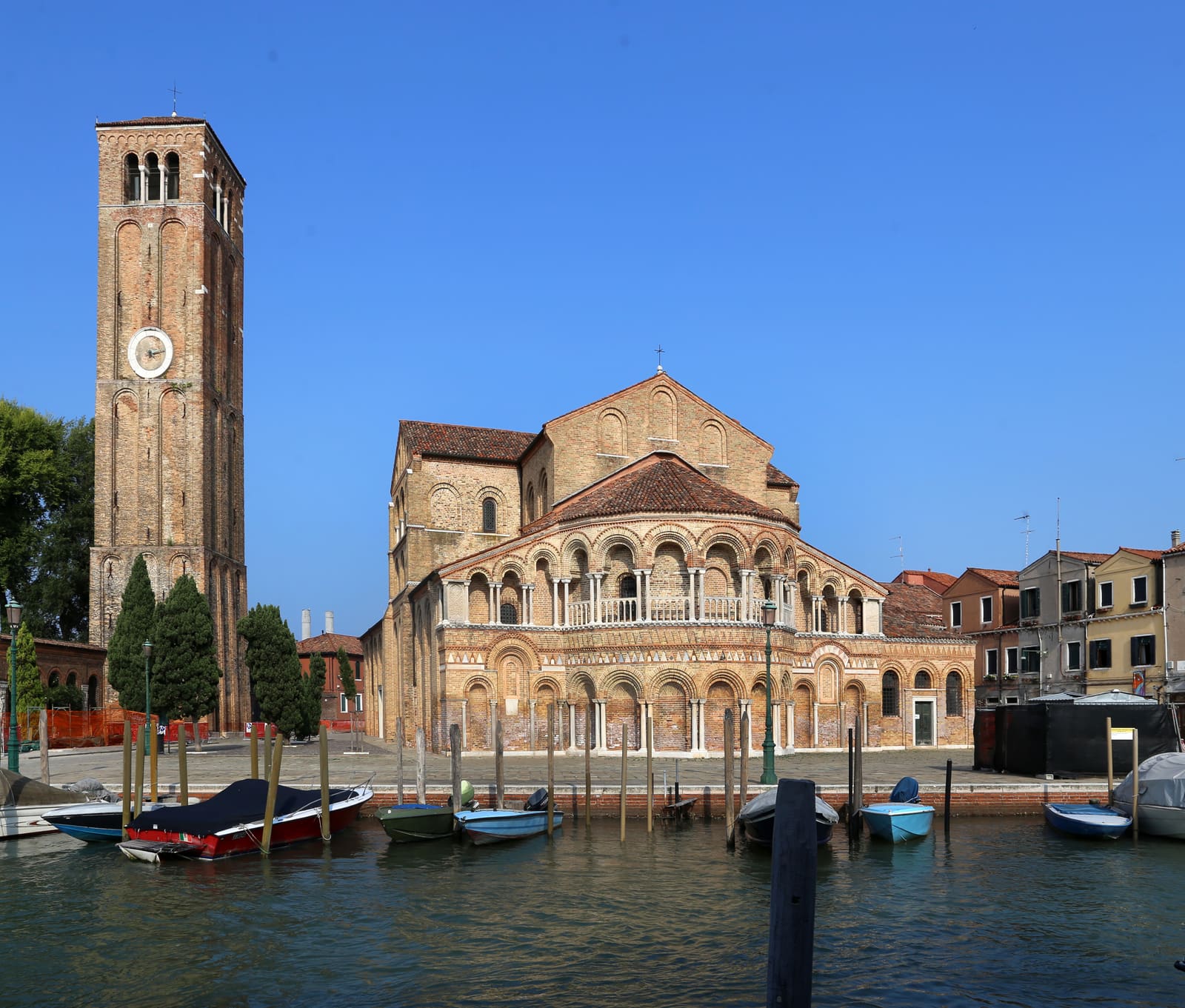
Basilica dei Santi Maria e Donato (Murano)
- sacred
- Price: free entry to the basilica; the Glass Museum nearby is a separate ticket, around €10
- Opening hours: 09:00 - 18:00
History
Murano is a cluster of small islands roughly 1.5 kilometres north of central Venice, connected to the city by regular vaporetto service. In 1291, the Republic ordered every glass furnace within Venice proper relocated here, officially to reduce the constant risk of fire in a city still built largely of wood and packed with flammable workshops.
The move also happened to gather the island's glassmakers somewhere the Republic could keep a closer eye on them, and further laws soon followed: from 1295, master glassmakers were forbidden from leaving Venetian territory without permission, on pain of severe punishment, to stop the island's closely guarded techniques reaching rival cities. In exchange, glassmakers enjoyed rare privileges for artisans — they could carry swords and hold minor public office, and unusually, their daughters were permitted to marry into Venice's patrician families.
The Basilica dei Santi Maria e Donato
Murano's principal landmark predates the glass industry that made the island famous. A church dedicated to the Virgin Mary is thought to have stood on this site since around the 7th century, and it was rebuilt in its present Veneto-Byzantine form in the early 12th century, making it one of the oldest churches in the Venetian lagoon and a close relative, in age and style, of St Mark's Basilica itself.
Its most celebrated feature is the mosaic floor, a sweeping expanse of intricate geometric patterns and animal figures laid around 1140 using ancient opus tessellatum and opus sectile techniques. Several scholars rank it among the finest surviving Byzantine-style pavements in Europe, and it predates the famous mosaic floor of St Mark's itself.
Did you know?
According to tradition, in 1125 the Venetian doge Domenico Michiel brought the relics of Saint Donatus of Euroea back from the Greek island of Cephalonia and donated them to the church, which then added the saint's name to its dedication. Along with the saint's bones came something far more unusual: large bones said to belong to the dragon Donatus was believed to have slain, which still hang today behind the altar.
Modern historians generally believe the so-called "dragon bones" actually belong to an extinct prehistoric animal, quite possibly a mammoth or similar Ice Age creature unearthed long before anyone understood fossils. The legend, however, has stuck for nine centuries regardless, and the bones remain on display in exactly the spot where medieval visitors would have marvelled at them.
Good to know
Murano is reached by regular vaporetto lines from Fondamente Nove or the Venice cruise terminal, and makes an easy half-day trip combined with the neighbouring islands of Burano and Torcello. The basilica sits a short walk from the main vaporetto stop, along the Fondamenta Giustinian canal.
The Museo del Vetro (Glass Museum), tracing a thousand years of Murano glassmaking, is only a few minutes' walk away and pairs naturally with a visit to the basilica. Many glass workshops around the island offer live glassblowing demonstrations, though it's worth confirming a workshop is genuinely Murano-made before buying, since imitations are common in Venice's souvenir shops.