
Gallerie dell'Accademia
- art-museum
- Price: €2 - €15
- Opening hours: 09:15 - 19:15 (Mon until 14:00)
History
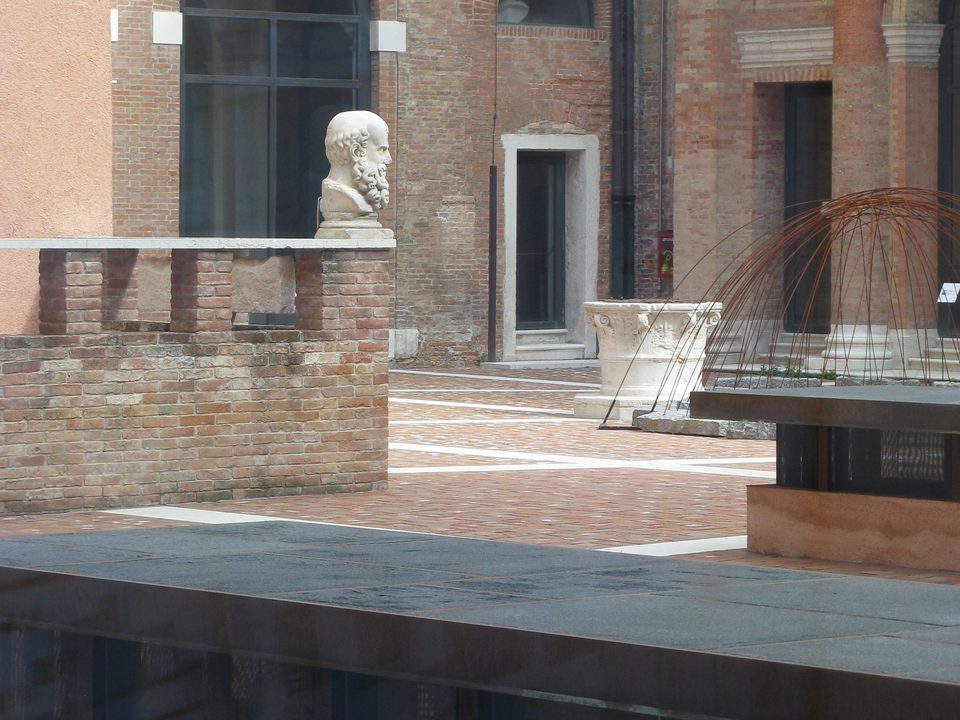
The gallery occupies the former Scuola Grande di Santa Maria della Carità, one of Venice's oldest confraternities, founded in 1260 and settled in buildings on this site from 1343 — including a church, a monastery, and the scuola's own grand hall. The complex fell out of religious use after Napoleon suppressed Venice's confraternities in the late 1790s, at which point the state began repurposing the buildings for a very different institution.
That institution, the Accademia di Pittura, Scultura e Architettura, had actually been founded separately in 1750, originally housed near St Mark's Square, with its first paintings donated by students and by the old Scuola della Carità itself. A Napoleonic decree reorganised it into the Accademia Reale di Belle Arti in 1807 and moved it into the secularised Carità complex, where the architect Giannantonio Selva spent the following years adapting the former religious buildings to their new role — creating the museum that today holds the world's foremost collection of Venetian painting.
The Bridge Outside the Door
The wooden bridge just outside the gallery's front door has its own eventful history. The first Ponte dell'Accademia, built in 1854 by the Austrian engineer Alfred Neville, was made of iron — a material Venetians disliked so intensely for clashing with the city's historic skyline that it was pulled down and replaced in 1933 with a graceful wooden arch designed by Eugenio Miozzi, reportedly built in just 37 days.
Miozzi's design proved so popular that plans to eventually replace it with a permanent stone bridge were shelved indefinitely. The wooden structure needed rebuilding by the 1980s, and the version crossing the Grand Canal today, completed in 1986, faithfully reproduces Miozzi's original silhouette over a reinforced steel frame. It remains one of only four bridges spanning the Grand Canal, and arguably its best vantage point.
Did you know?
Among the collection's largest and most notorious works is Paolo Veronese's vast "Feast in the House of Levi," originally painted in 1573 as a Last Supper. Its crowd of drunken revellers, dwarfs, and a dog at Christ's feet drew the attention of the Holy Tribunal of the Inquisition, which summoned Veronese to explain why he had filled a sacred scene with what the tribunal called "buffoons, drunken Germans, dwarfs, and other such vulgarities."
Ordered to alter the painting within three months, Veronese instead simply renamed it — swapping the Last Supper for a different, less doctrinally central gospel banquet at which scripture explicitly placed "sinners" among the guests. The canvas, unchanged, still hangs in the Accademia today under its adjusted title: a rare case of a Renaissance master out-manoeuvring the Inquisition with nothing more than a new name.
Good to know
Standard admission is discounted for visitors under 25 and reduced or free for those under 18, with proof of age requested at the ticket desk. Advance online booking is recommended in peak season, since the galleries — spread over a former monastery rather than a purpose-built museum — fill up faster than their modest size suggests.
The rooms are arranged in roughly chronological order, from Byzantine gold-ground panels through to the Renaissance, so visitors short on time can head straight for the final rooms holding Bellini, Giorgione, Titian, Veronese, and Tintoretto. Early morning or the last hour before closing tend to be quietest, and the museum sits right on the Dorsoduro side of the wooden bridge outside.